Buy skepticshop.com ?
We are moving the project
skepticshop.com .
Are you interested in purchasing the domain
skepticshop.com ?
domain@kv-gmbh.de · 0541-91531010
Buy skepticshop.com ?
How are constants named?
Constants are typically named using uppercase letters with underscores separating words, for example, MAX_VALUE or PI. This naming convention helps distinguish constants from variables and makes them easily recognizable in the code. Constants are usually given descriptive names that reflect their purpose or value, making the code more readable and understandable for other developers. **
Do natural constants change?
Natural constants, such as the speed of light or the gravitational constant, are considered to be unchanging and universal in nature. These constants are believed to remain constant throughout the universe and across time. Any changes in these constants would have significant implications for our understanding of the laws of physics and the nature of the universe. However, some theories in physics, such as string theory, suggest that certain constants may have varied in the early universe or in different regions of the cosmos. **


Similar search terms for Constants
Top-Angebote
Products related to Constants:
-
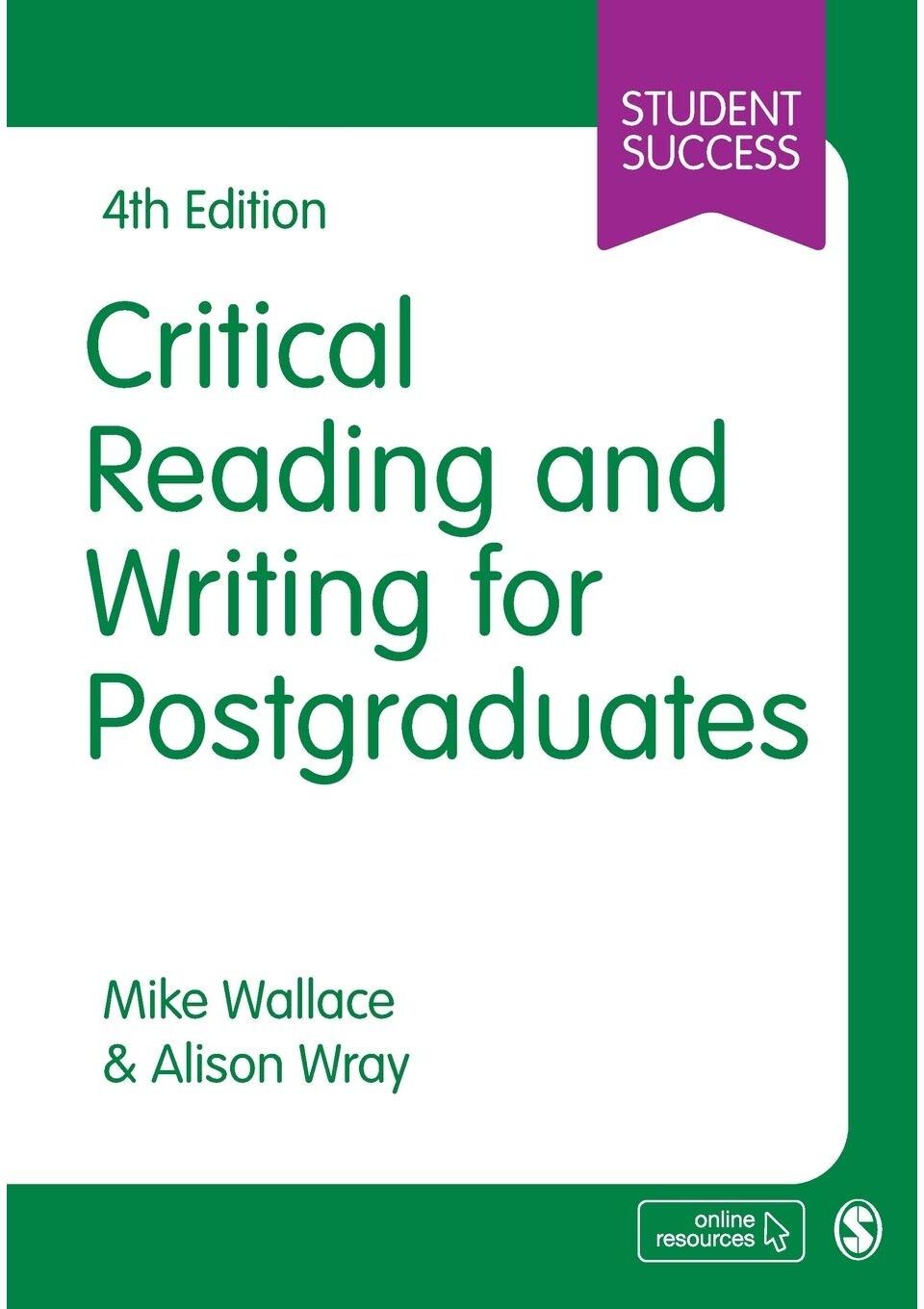
SAGE Publications Critical Reading and Writing for Postgraduates (Student Success)Reading critically, and writing using critical techniques, are crucial skills you need to apply to your academic work. If you need to engage with published (or unpublished) literature such as essays, dissertations or theses, research papers or oral presentations, this proven guide helps you develop a reflective and advanced critical approach to your research and writing. New to this edition: Two new chapters on basic and advanced writing skills More advice on self-bias and perception Updates and additional examples throughout Updated online resources providing additional support. A Companion Website provides additional resources to help you apply the critical techniques you learn. From templates and checklists, access to SAGE journal articles and additional case studies, these free resources will make sure you successfully master advanced critical skills.18,95 £*Shipping: 2,99 £Secure redirect to the provider
-
Blink Publishing Ltd Battle Ready: Eliminate Doubt, Embrace Courage, Transform Your Life by Ollie OllertonBattle Ready: Eliminate Doubt, Embrace Courage, Transform Your Life by Ollie Ollerton How do you make a commitment and achieve your goals? How do you end procrastination and hesitation that feeds self-doubt? How do you learn to be courageous in all aspects of your life? Ex-Special Forces soldier Ollie Ollerton knows more than his fair share about keeping going. As a recruit he survived the infamously tough SAS selection process on a busted ankle with the Directing Staff pleading with him to give up. But it's in Ollie's personal life that he really had to dig deep. At his lowest he was battling a failed relationship, substance abuse, depression and a reckless disregard for his own life. In his new book Ollie tells the story of how he turned his life around and passes on the lessons he has learned. In Battle Ready Ollie shares the step-by-step plan that changed his life. From finding purpose and visualising an outcome, to breaking bad habits and establishing positive new routines, his advice will help readers to overcome their own obstacles; to become ready for any battle.2,52 £*Shipping: 1,99 £Secure redirect to the provider
-
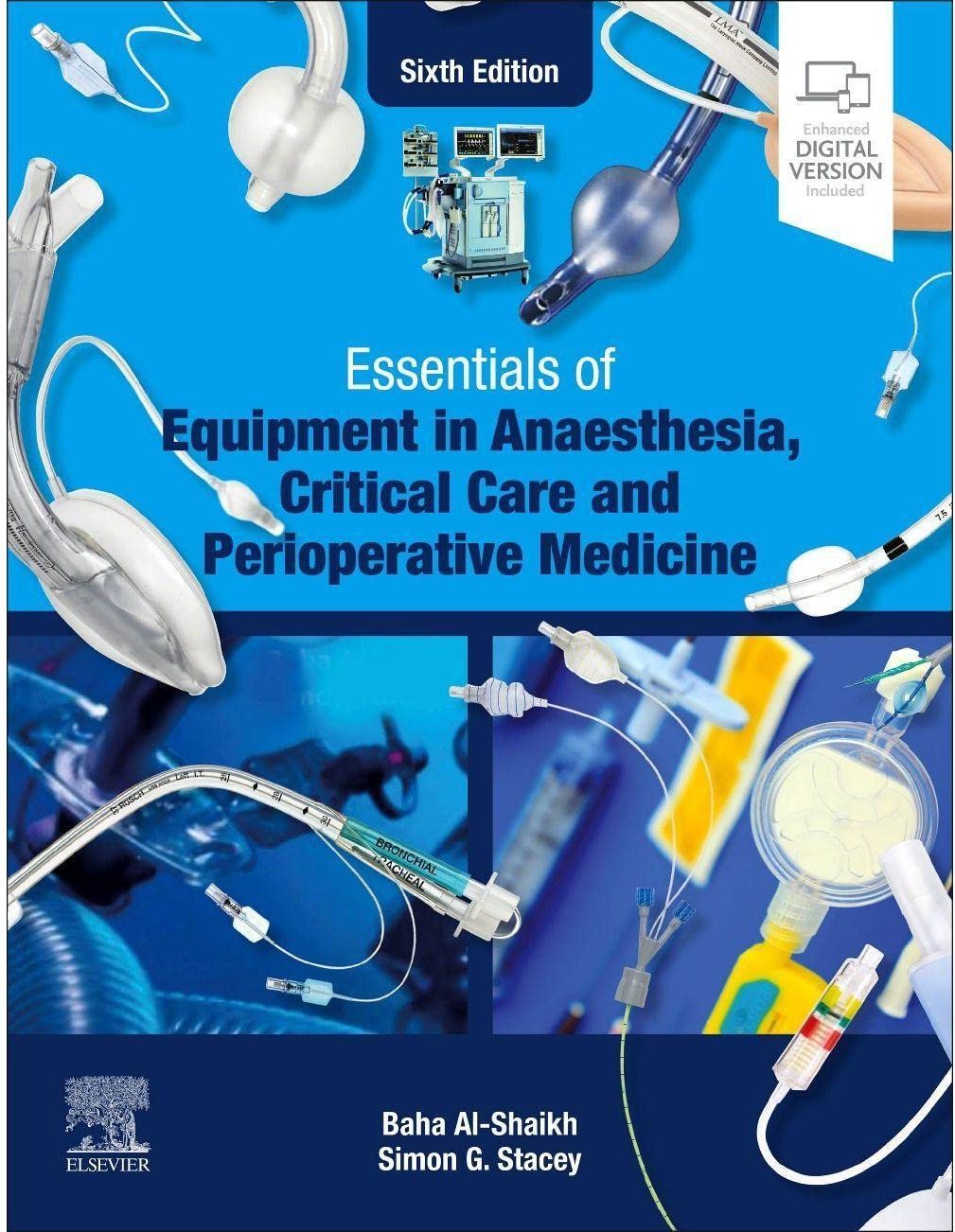
Elsevier Essentials of Equipment in Anaesthesia, Critical Care and Perioperative MedicineEasy to read and follow, Essentials of Equipment in Anaesthesia, Critical Care and Perioperative Medicine makes an otherwise dry subject digestible and easy to learn. This practical textbook comprehensively covers all the equipment used in the operating theatre and intensive care unit, including why it is used and any related safety concerns. It has been fully updated in its sixth edition to include new technologies introduced during the Covid-19 pandemic. This is ideal as the main text for all trainees undertaking the primary FRCA exams and is also suitable anyone who works with anaesthetic equipment, including anaesthetic and intensive care nurses and operating department practitioners. It features concise and consistent text and illustrations, self-assessment features, and exam tips. Portable, concise and simply formatted - a perfect practical companion Clear coloured images and illustrations bring the text to life Follows the Royal College of Anaesthetists postgraduate training and exam syllabus Summary boxes, more than 100 exam style questions, and OSCE stations and exam tips all aid the reader in exam revision Covers new equipment and fully updated relevant to current practice Suggested further reading fully updated New information on: Aladin Cassettes; Glostavent machine; CONTRAfluran system; videolaryngoscopy and high definition camera use in intubation and endoscopy; use of ultrasound in epidural; Penthrox; NRFit devices; Cell saver; ECMO38,99 £*Shipping: 0,00 £Secure redirect to the provider
-
Jessica Nails Jessica Critical Care - Intensive Care for Soft Nails 14.8mlDiscover for yourself how beautiful your nails can be with the assistance of treatments from the foremost authority on natural nail care. Jessica Nails have created a system of natural nail care unparalleled in its beauty and efficacy. The Jessica System is the first word in nail care for celebrities, starlets, journalists and luminaries around the world.21,50 £*Shipping: 2,95 £Secure redirect to the provider


-
What are variables and constants?
Variables are symbols that represent unknown or changing values in mathematical equations or computer programming. They can take on different values during the execution of a program or the solving of an equation. Constants, on the other hand, are values that remain fixed and do not change throughout the program or equation. They are typically used to represent fixed values such as mathematical constants (e.g., π) or parameters that do not change. **
-
Which Casio calculators contain physical constants?
Casio calculators such as the fx-991EX and fx-115ES PLUS contain physical constants. These calculators allow users to access a library of commonly used physical constants such as the speed of light, Planck's constant, and the charge of an electron. This feature is particularly useful for students and professionals in the fields of physics, chemistry, and engineering who frequently need to use these constants in their calculations. **
-
Why do constants disappear when differentiating?
Constants disappear when differentiating because the derivative of a constant is always zero. This is because a constant value does not change as the independent variable changes, so its rate of change is always zero. When taking the derivative of a function, the constant term does not affect the rate of change of the function, so it is essentially "ignored" in the differentiation process. **
-
How do you calculate the lattice constants?
The lattice constant is calculated by measuring the distances between lattice points in a crystal structure. This can be done using techniques such as X-ray diffraction or electron diffraction. By analyzing the diffraction patterns, the spacing between planes of atoms in the crystal lattice can be determined, and the lattice constant can be calculated using mathematical equations based on the Bragg's law. The lattice constant is typically expressed in units of length, such as angstroms or nanometers. **

Why do constants disappear when forming the derivative?
Constants disappear when forming the derivative because the derivative measures the rate of change of a function at a specific point, and constants do not affect the rate of change. Since constants have a fixed value and do not vary with the independent variable, they do not contribute to the slope of the function at a given point. Therefore, when taking the derivative, constants are considered to have a derivative of zero and are essentially ignored in the calculation. **
Are natural laws and constants the same thing?
Natural laws and constants are not the same thing. Natural laws are principles that describe the behavior of the natural world, such as the law of gravity or the laws of thermodynamics. Constants, on the other hand, are specific numerical values that remain unchanged in a given context, such as the speed of light in a vacuum or the gravitational constant. While natural laws describe the relationships and patterns in nature, constants provide specific numerical values that are used in scientific calculations and theories. **
Top-Angebote
Products related to Constants:
-
Research-powered Eye Duo - Skincare Kit Charlotte Tilbury 3330 Charlotte's Research-powered Eye Duo Size:Darlings, unlock the secret to eyes that appear brighter, depuffed, smoother and younger with my Research-Powered Eye Duo! This CharlotteTilbury.com EXCLUSIVE skincare duo includes:94,05 £*Shipping: 0,00 £Secure redirect to the provider
-
SAGE Publications Case Study Research and Applications: Design and MethodsRecognized as one of the most cited methodology books in the social sciences, the Sixth Edition of Robert K. Yin′s bestselling text provides a complete portal to the world of case study research. With the integration of 11 applications in this edition, the book gives readers access to exemplary case studies drawn from a wide variety of academic and applied fields. Ultimately, Case Study Research and Applications will guide students in the successful use and application of the case study research method.59,99 £*Shipping: 0,00 £Secure redirect to the provider
-
SAGE Publications Critical Reading and Writing for Postgraduates (Student Success)Reading critically, and writing using critical techniques, are crucial skills you need to apply to your academic work. If you need to engage with published (or unpublished) literature such as essays, dissertations or theses, research papers or oral presentations, this proven guide helps you develop a reflective and advanced critical approach to your research and writing. New to this edition: Two new chapters on basic and advanced writing skills More advice on self-bias and perception Updates and additional examples throughout Updated online resources providing additional support. A Companion Website provides additional resources to help you apply the critical techniques you learn. From templates and checklists, access to SAGE journal articles and additional case studies, these free resources will make sure you successfully master advanced critical skills.18,95 £*Shipping: 2,99 £Secure redirect to the provider
-
Blink Publishing Ltd Battle Ready: Eliminate Doubt, Embrace Courage, Transform Your Life by Ollie OllertonBattle Ready: Eliminate Doubt, Embrace Courage, Transform Your Life by Ollie Ollerton How do you make a commitment and achieve your goals? How do you end procrastination and hesitation that feeds self-doubt? How do you learn to be courageous in all aspects of your life? Ex-Special Forces soldier Ollie Ollerton knows more than his fair share about keeping going. As a recruit he survived the infamously tough SAS selection process on a busted ankle with the Directing Staff pleading with him to give up. But it's in Ollie's personal life that he really had to dig deep. At his lowest he was battling a failed relationship, substance abuse, depression and a reckless disregard for his own life. In his new book Ollie tells the story of how he turned his life around and passes on the lessons he has learned. In Battle Ready Ollie shares the step-by-step plan that changed his life. From finding purpose and visualising an outcome, to breaking bad habits and establishing positive new routines, his advice will help readers to overcome their own obstacles; to become ready for any battle.2,52 £*Shipping: 1,99 £Secure redirect to the provider
-
How are constants named?
Constants are typically named using uppercase letters with underscores separating words, for example, MAX_VALUE or PI. This naming convention helps distinguish constants from variables and makes them easily recognizable in the code. Constants are usually given descriptive names that reflect their purpose or value, making the code more readable and understandable for other developers. **
-
Do natural constants change?
Natural constants, such as the speed of light or the gravitational constant, are considered to be unchanging and universal in nature. These constants are believed to remain constant throughout the universe and across time. Any changes in these constants would have significant implications for our understanding of the laws of physics and the nature of the universe. However, some theories in physics, such as string theory, suggest that certain constants may have varied in the early universe or in different regions of the cosmos. **
-
What are variables and constants?
Variables are symbols that represent unknown or changing values in mathematical equations or computer programming. They can take on different values during the execution of a program or the solving of an equation. Constants, on the other hand, are values that remain fixed and do not change throughout the program or equation. They are typically used to represent fixed values such as mathematical constants (e.g., π) or parameters that do not change. **
-
Which Casio calculators contain physical constants?
Casio calculators such as the fx-991EX and fx-115ES PLUS contain physical constants. These calculators allow users to access a library of commonly used physical constants such as the speed of light, Planck's constant, and the charge of an electron. This feature is particularly useful for students and professionals in the fields of physics, chemistry, and engineering who frequently need to use these constants in their calculations. **
Similar search terms for Constants
-
Elsevier Essentials of Equipment in Anaesthesia, Critical Care and Perioperative MedicineEasy to read and follow, Essentials of Equipment in Anaesthesia, Critical Care and Perioperative Medicine makes an otherwise dry subject digestible and easy to learn. This practical textbook comprehensively covers all the equipment used in the operating theatre and intensive care unit, including why it is used and any related safety concerns. It has been fully updated in its sixth edition to include new technologies introduced during the Covid-19 pandemic. This is ideal as the main text for all trainees undertaking the primary FRCA exams and is also suitable anyone who works with anaesthetic equipment, including anaesthetic and intensive care nurses and operating department practitioners. It features concise and consistent text and illustrations, self-assessment features, and exam tips. Portable, concise and simply formatted - a perfect practical companion Clear coloured images and illustrations bring the text to life Follows the Royal College of Anaesthetists postgraduate training and exam syllabus Summary boxes, more than 100 exam style questions, and OSCE stations and exam tips all aid the reader in exam revision Covers new equipment and fully updated relevant to current practice Suggested further reading fully updated New information on: Aladin Cassettes; Glostavent machine; CONTRAfluran system; videolaryngoscopy and high definition camera use in intubation and endoscopy; use of ultrasound in epidural; Penthrox; NRFit devices; Cell saver; ECMO38,99 £*Shipping: 0,00 £Secure redirect to the provider
-
Jessica Nails Jessica Critical Care - Intensive Care for Soft Nails 14.8mlDiscover for yourself how beautiful your nails can be with the assistance of treatments from the foremost authority on natural nail care. Jessica Nails have created a system of natural nail care unparalleled in its beauty and efficacy. The Jessica System is the first word in nail care for celebrities, starlets, journalists and luminaries around the world.21,50 £*Shipping: 2,95 £Secure redirect to the provider
-
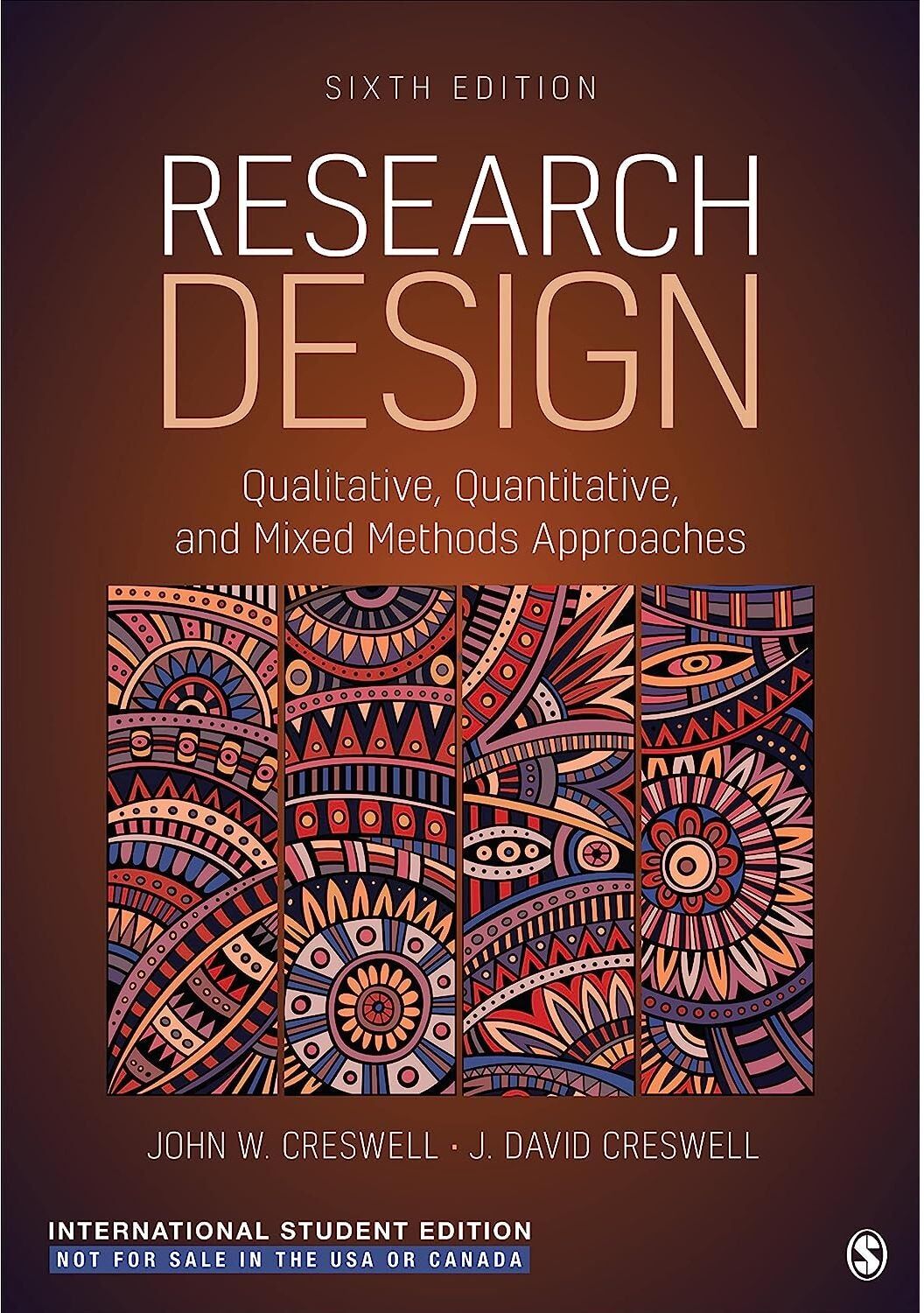
SAGE Publications Research Design - International Student Edition: Qualitative, Quantitative, and Mixed Methods ApproachesThe new edition of the best-selling text, Research Design: Qualitative, Quantitative, and Mixed Methods Approaches, continues the pioneering tradition of providing clear and concise instruction for understanding research and developing proposals for all three approaches. John W. Creswell and co-author J. David Creswell include a preliminary consideration of philosophical assumptions, a review of the literature, an assessment of the use of theory in research approaches, and reflections about the importance of writing and ethics in scholarly inquiry in a way that is applicable to all types of research. Key elements of the research process, giving specific attention to each approach. The book has been lauded for its language and tone, which are both accessible and inviting. It is a text that students keep and continue to use as a resource throughout their studies, once the specific class is over. The Sixth Edition includes more coverage of community-based participatory research, comparisons of qualitative and quantitative research, an expanded glossary with basic terms, updated examples of social, behavioural, and health research, new coverage of ethical requirements, updated APA 7th edition coverage, and additional exercises aimed at research projects.59,95 £*Shipping: 0,00 £Secure redirect to the provider
-
Why do constants disappear when differentiating?
Constants disappear when differentiating because the derivative of a constant is always zero. This is because a constant value does not change as the independent variable changes, so its rate of change is always zero. When taking the derivative of a function, the constant term does not affect the rate of change of the function, so it is essentially "ignored" in the differentiation process. **
-
How do you calculate the lattice constants?
The lattice constant is calculated by measuring the distances between lattice points in a crystal structure. This can be done using techniques such as X-ray diffraction or electron diffraction. By analyzing the diffraction patterns, the spacing between planes of atoms in the crystal lattice can be determined, and the lattice constant can be calculated using mathematical equations based on the Bragg's law. The lattice constant is typically expressed in units of length, such as angstroms or nanometers. **
-
Why do constants disappear when forming the derivative?
Constants disappear when forming the derivative because the derivative measures the rate of change of a function at a specific point, and constants do not affect the rate of change. Since constants have a fixed value and do not vary with the independent variable, they do not contribute to the slope of the function at a given point. Therefore, when taking the derivative, constants are considered to have a derivative of zero and are essentially ignored in the calculation. **
-
Are natural laws and constants the same thing?
Natural laws and constants are not the same thing. Natural laws are principles that describe the behavior of the natural world, such as the law of gravity or the laws of thermodynamics. Constants, on the other hand, are specific numerical values that remain unchanged in a given context, such as the speed of light in a vacuum or the gravitational constant. While natural laws describe the relationships and patterns in nature, constants provide specific numerical values that are used in scientific calculations and theories. **
* All prices are inclusive of VAT and, if applicable, plus shipping costs. The offer information is based on the details provided by the respective shop and is updated through automated processes. Real-time updates do not occur, so deviations can occur in individual cases. ** Note: Parts of this content were created by AI.